Tuesday, October 15, 2013

History.


This is an excellent primer on the history of Nissan/Datsun and the entire post-WW2 Japanese auto industry.

Produced in 1995-96, it's a little out dated, but it's a great 47 minute history lesson.

Sunday, October 13, 2013

Hello? Is it me your looking for?

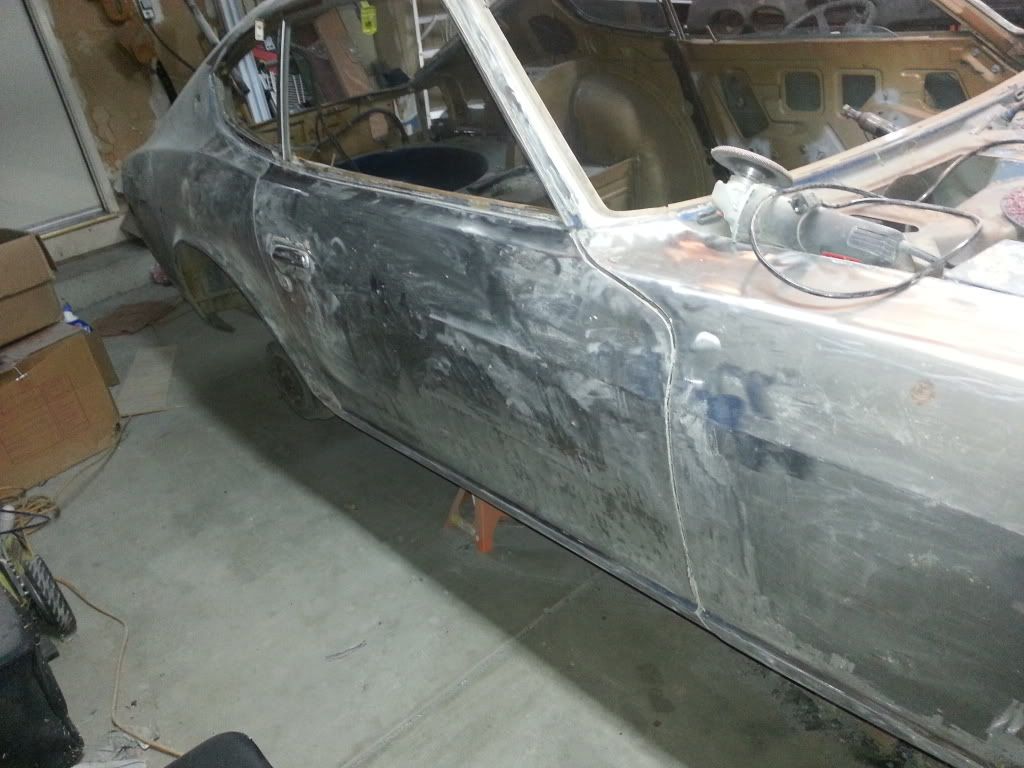
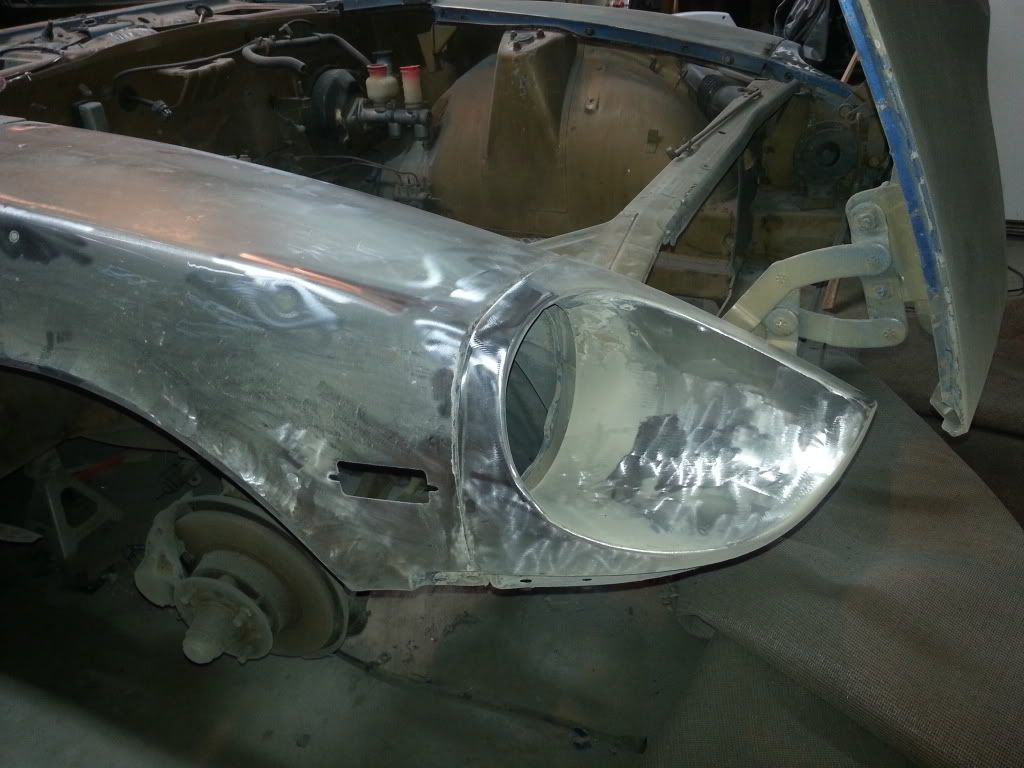
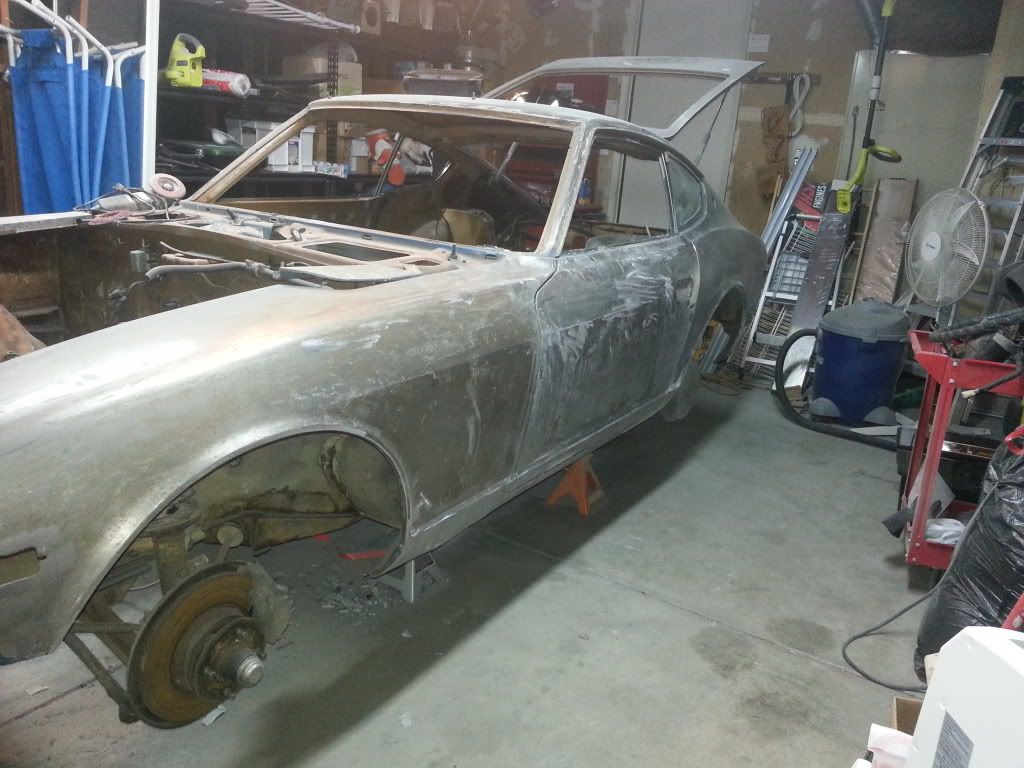
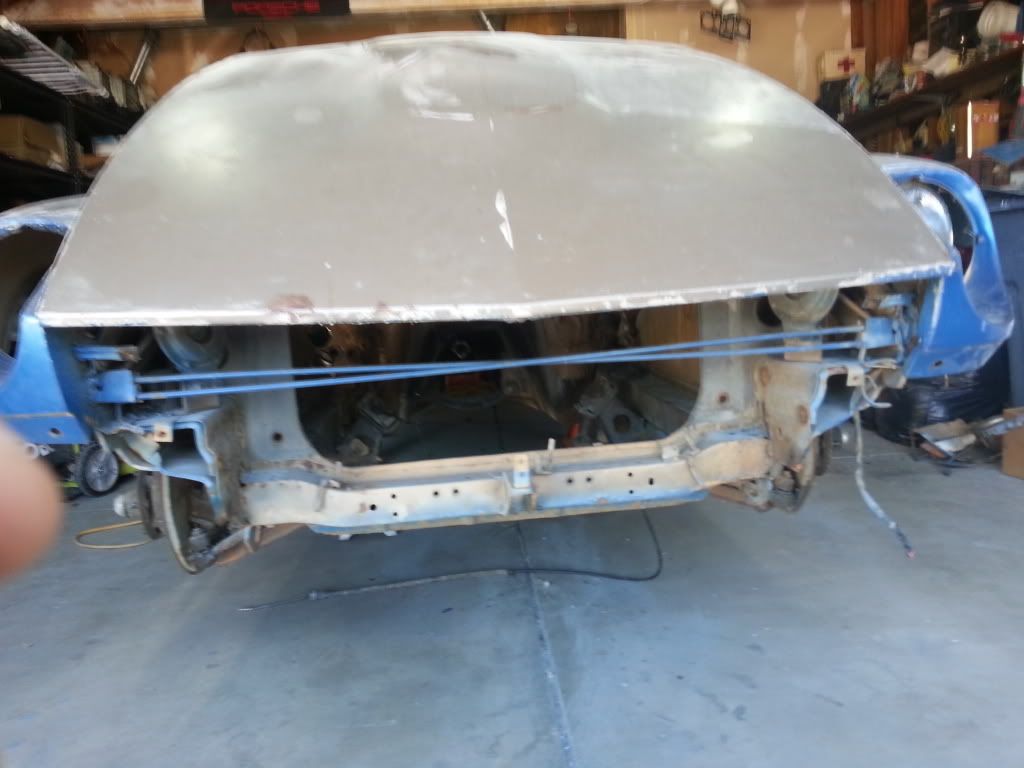
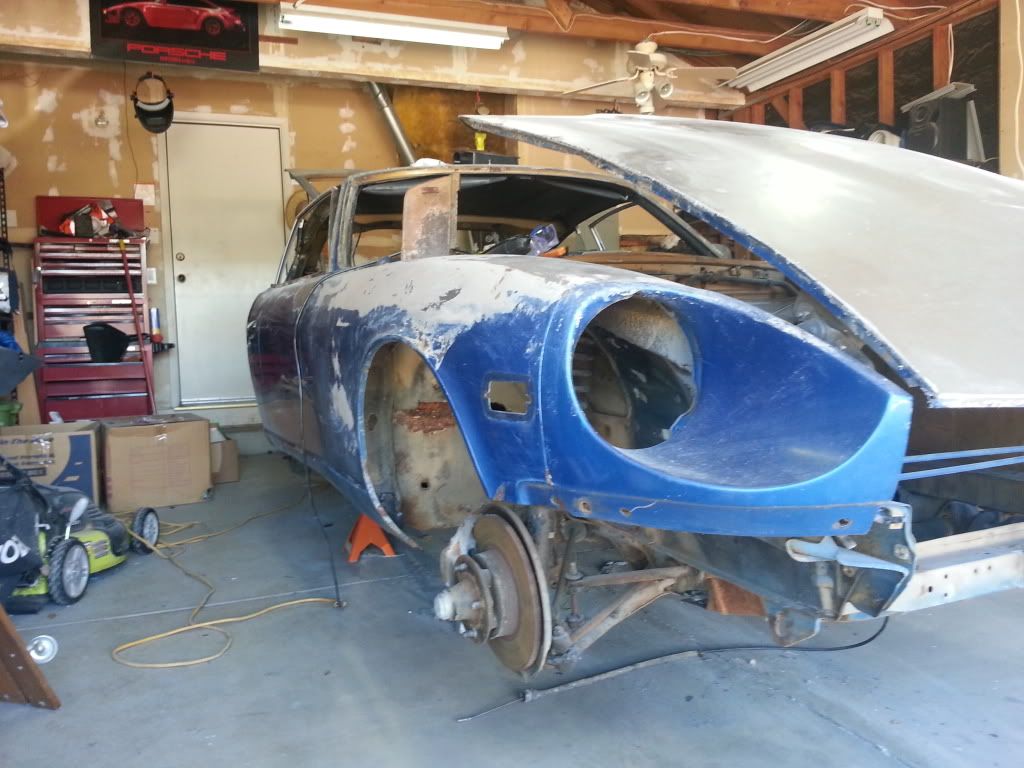
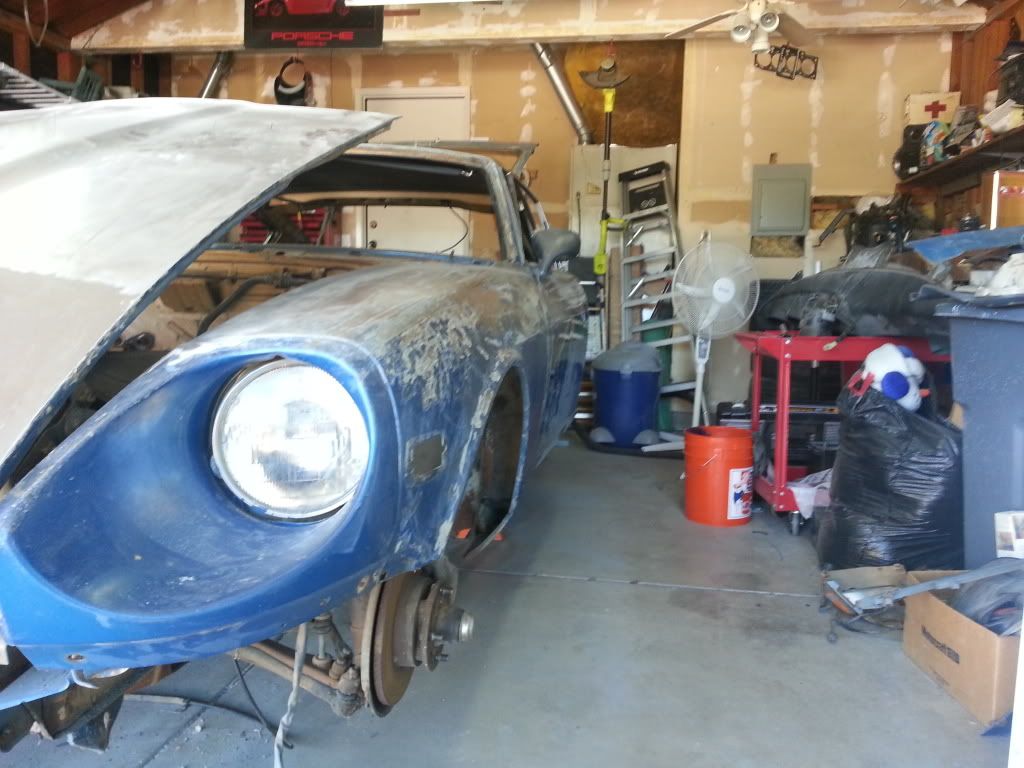
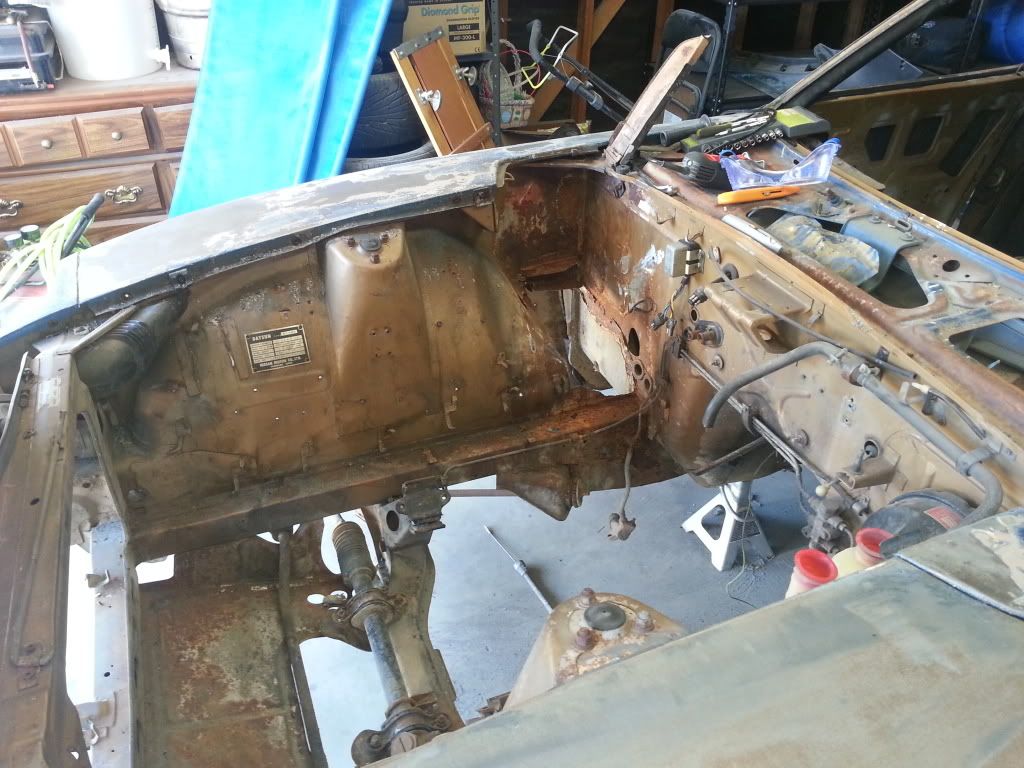
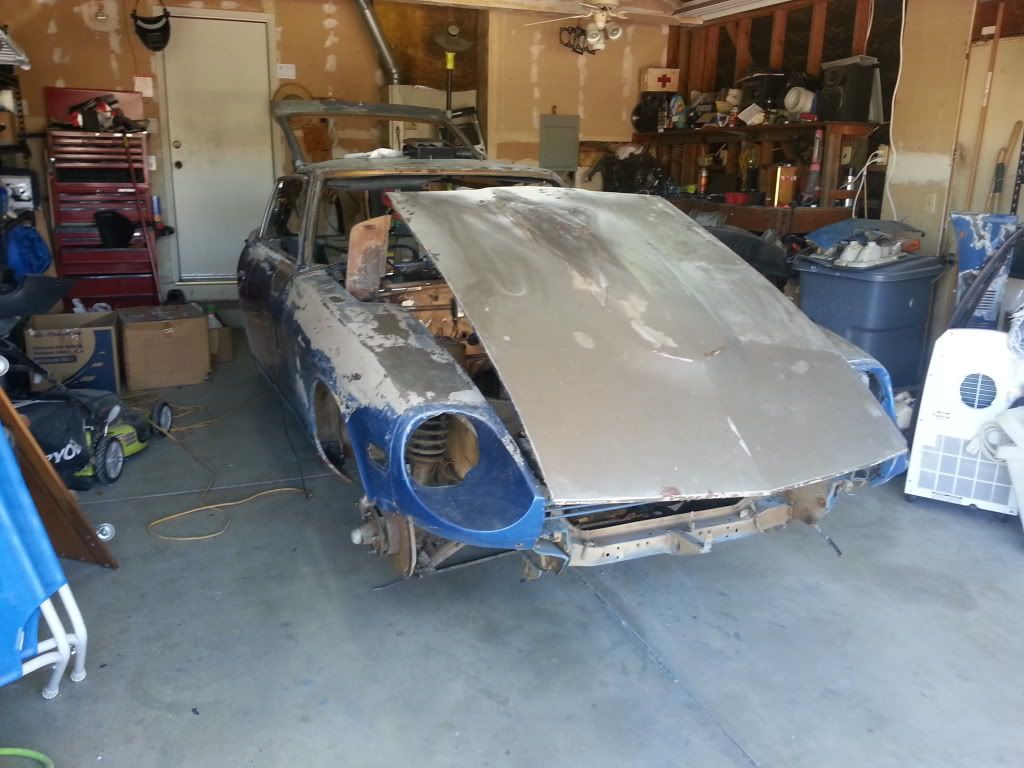
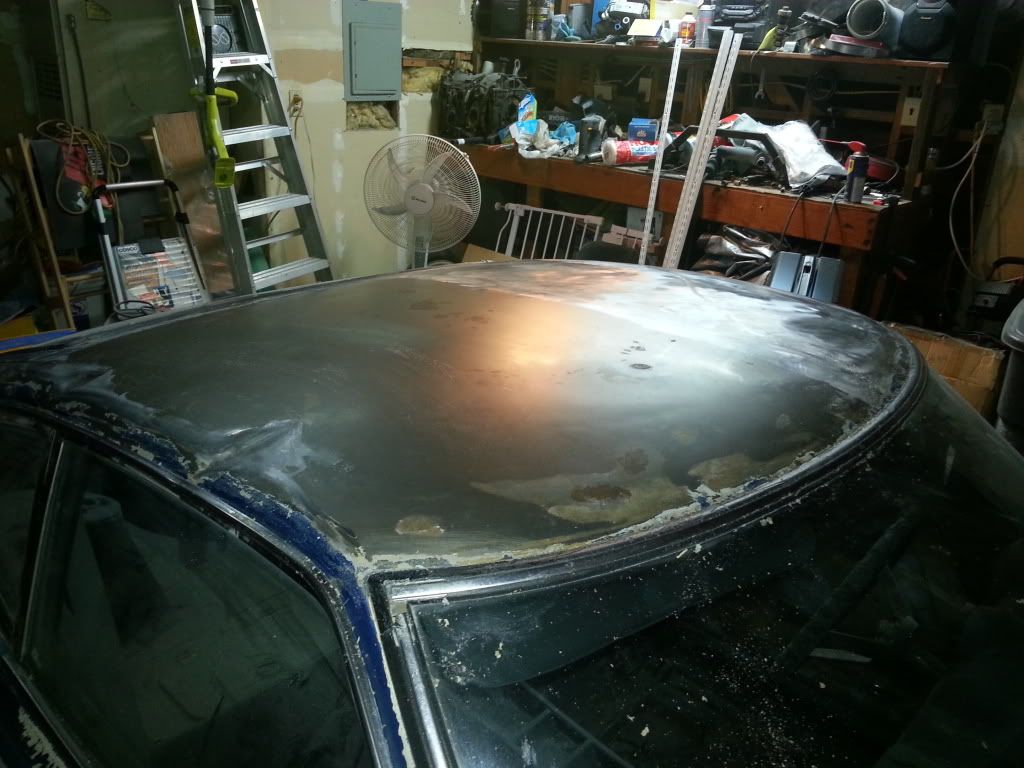
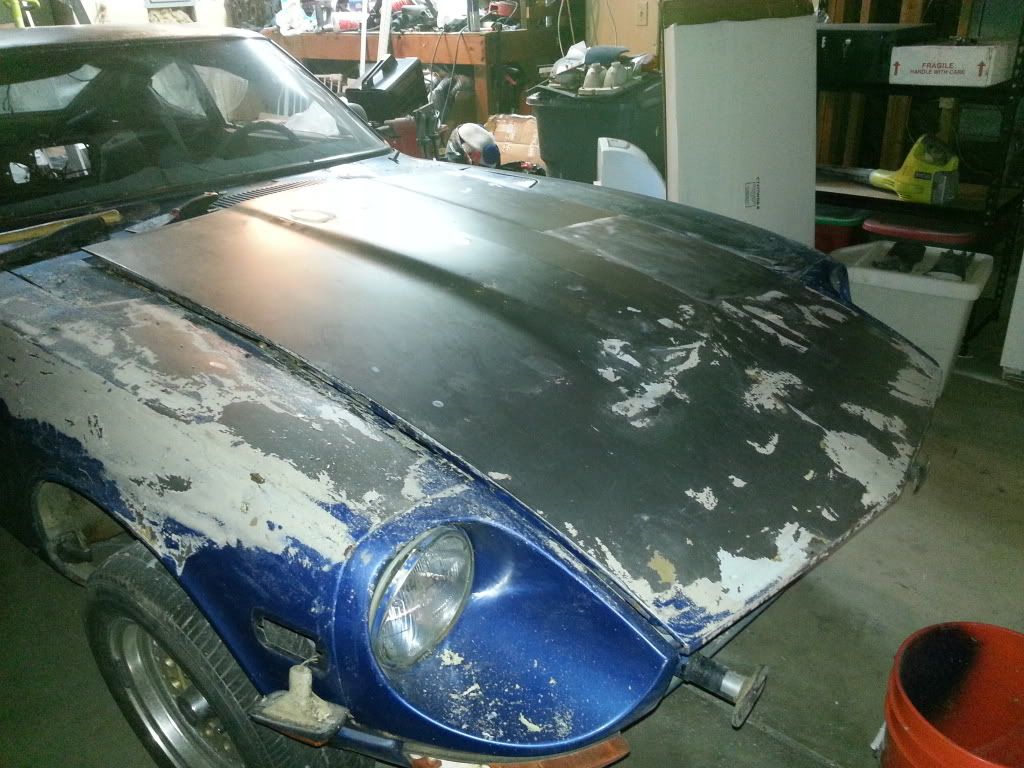
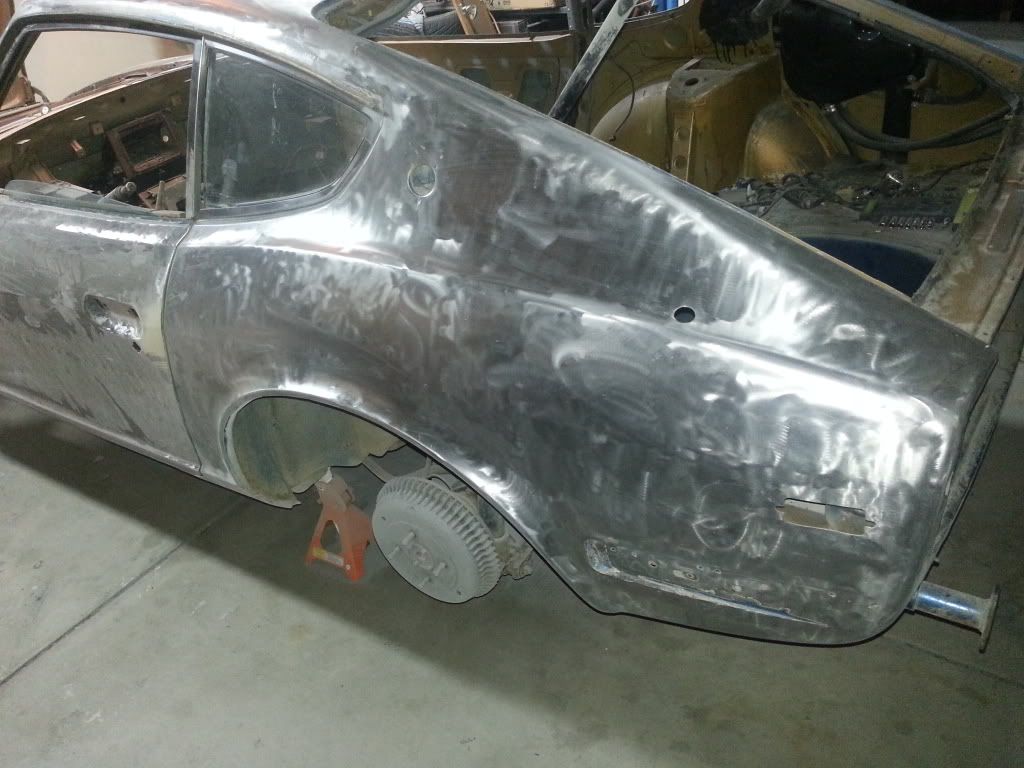
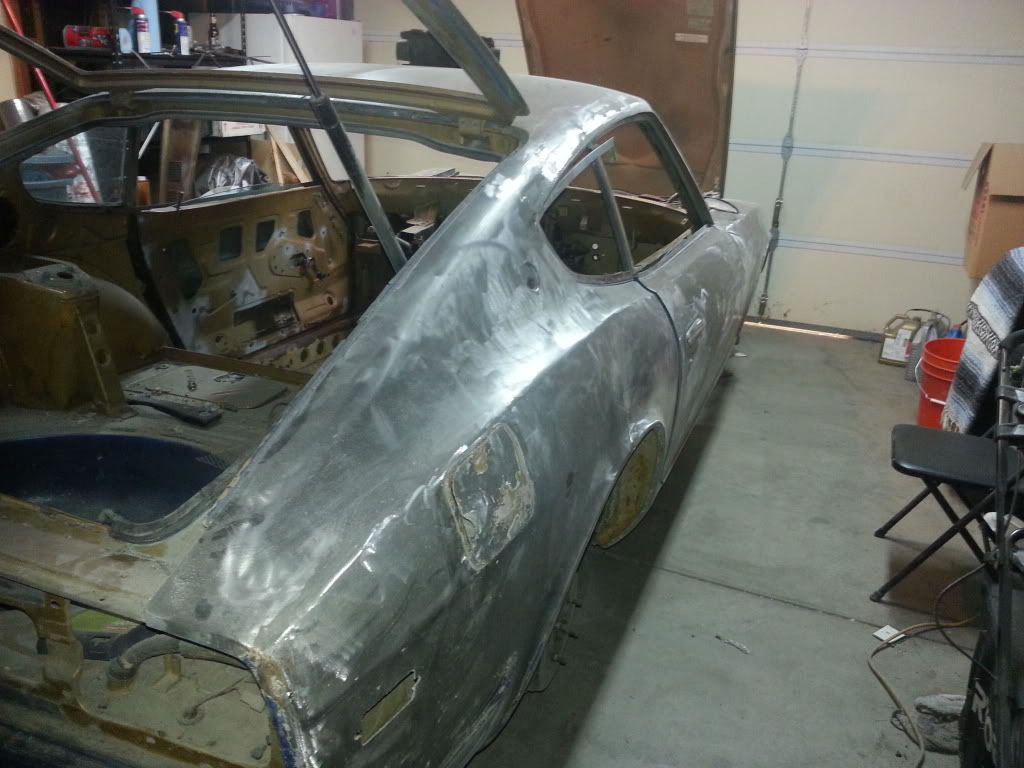
Look. I know it's been a while. In the last two months I've judged TWO car shows, built a nursery, quit my job, got a new job and yet I still found a little time here and there to get the car to about 90% bare metal.


The Blue isn't the top coat of paint, there's a blue cot on the wall that is giving some reflection.


So, where are we? What's left? Lots, but just to get primer down we need to

  • Remove the inspection lids (the hinged lids next to the hood). They are warped beyond repair. Going to replace them, maybe with louvered lids to help expel the under hood heat.
  • Finish grindering the rear of vehicle.
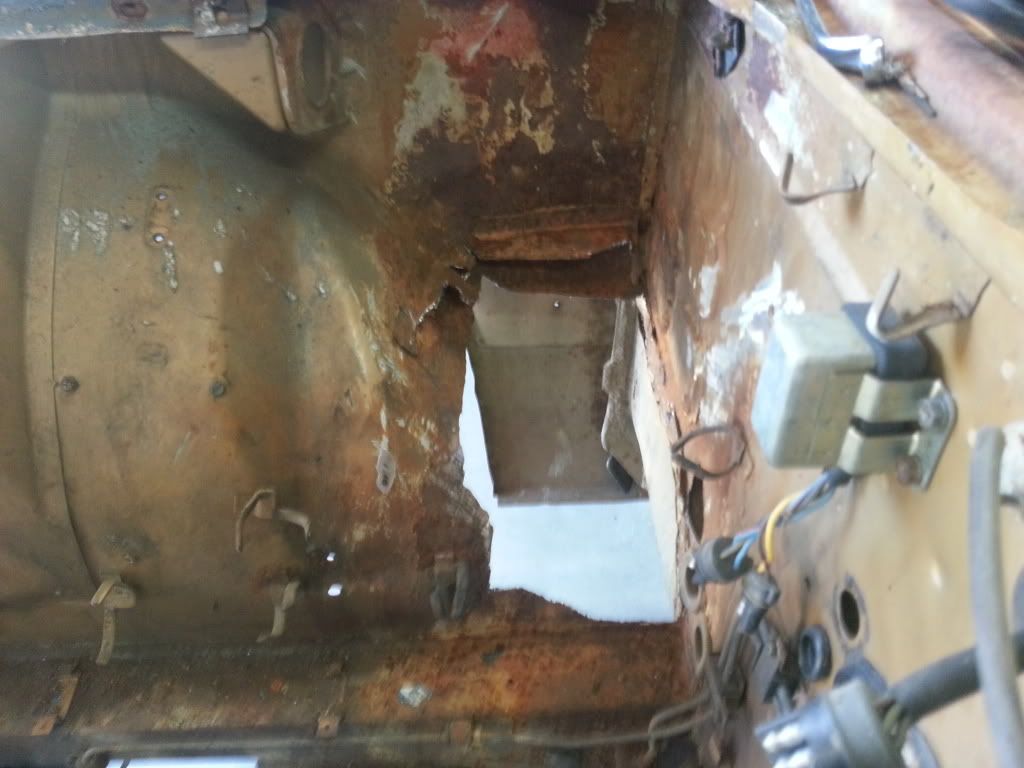
  • Weld the hole shut in the passenger front wheel well.
  • Drill out the rusted screws that are keeping the quarter panel windows and trim in.
  • Strip the engine bay. All that's left is a few electrical relays/modules and the brake hydraulics.
  • Remove the window wiper motor and tracks.
  • Mask/tape off the chrome window trim.
  • Drop the gas tank to remove the safety bumper supports. Patch the holes in the rear shut.
  • Get a front spoiler and wing.

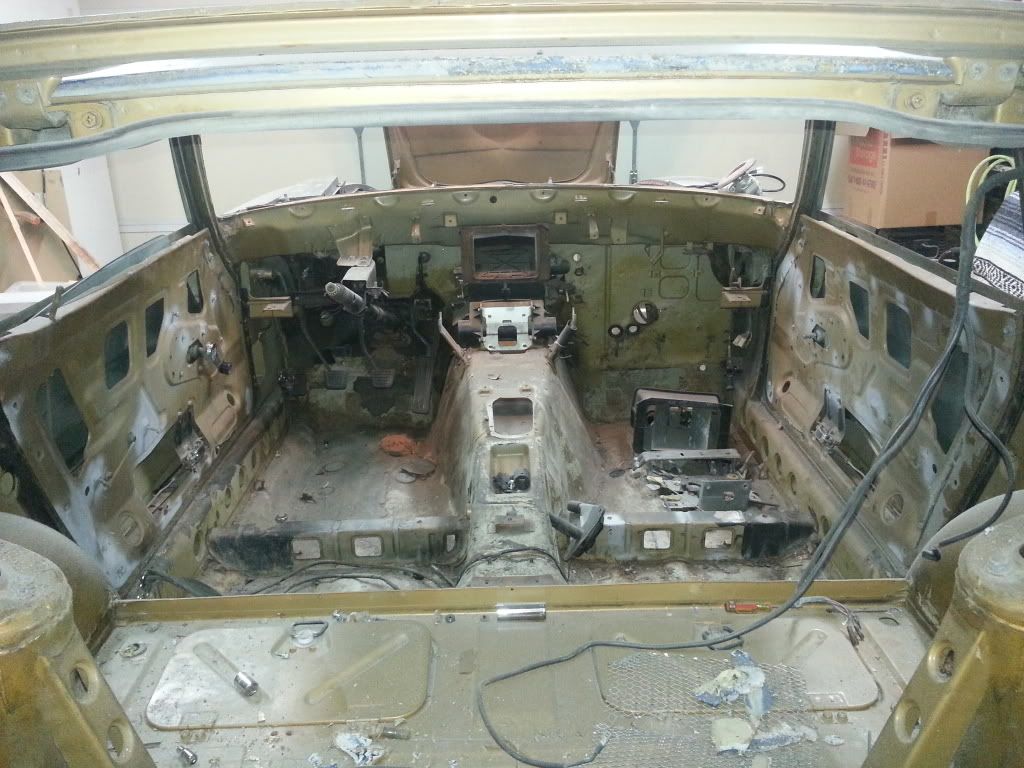
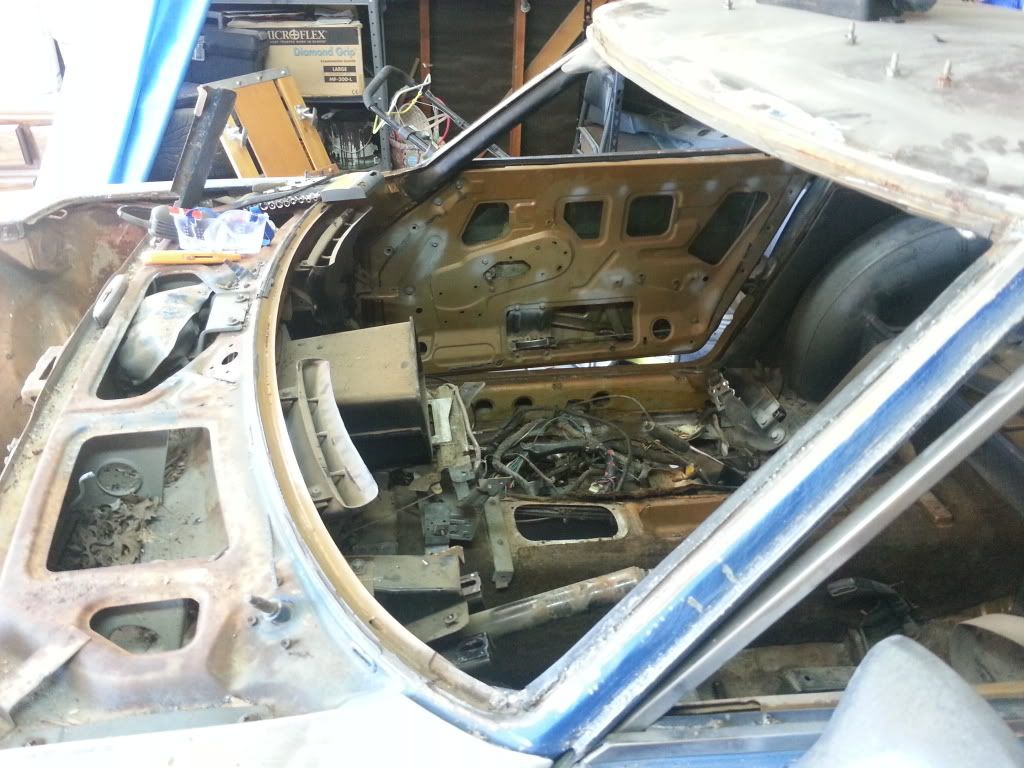
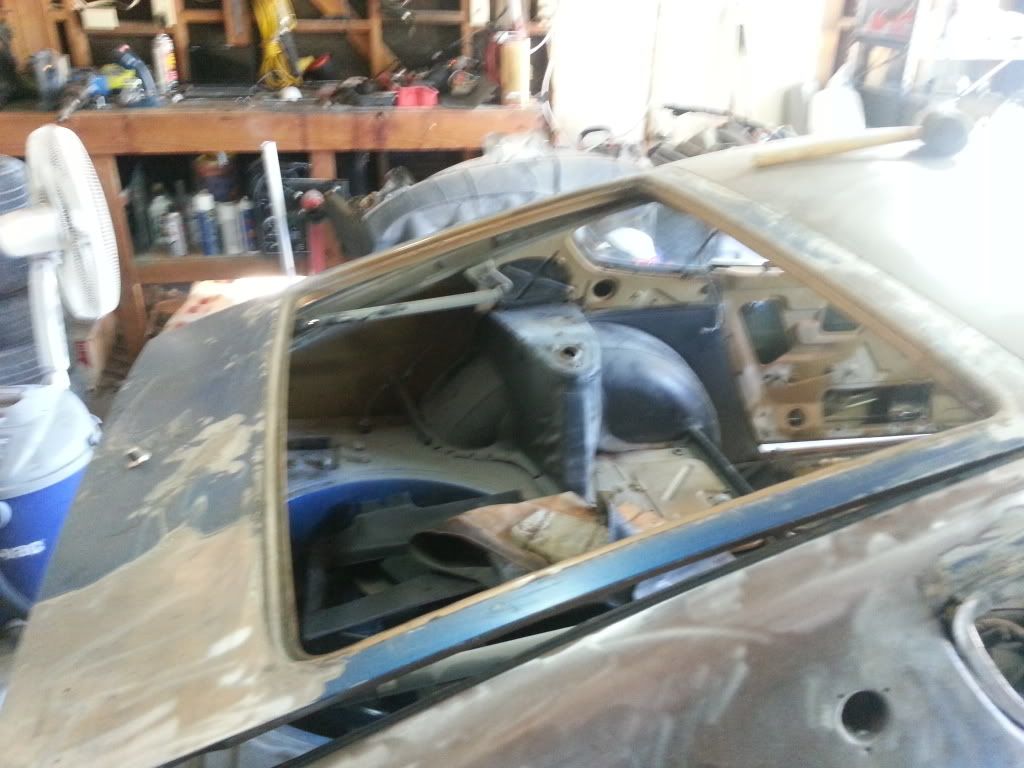
For the interior we have a smaller list.
  • Remove that rusted out heater system. 
  • Remove the last few relays and vents from the passenger firewall area.
  • Remove the last bit of electrical wiring from the back.
  • Scrape what is left of the headliner padding off the roof.
Once the primer is down, it's sand, sand, sand and more sanding. Multiple coats of primer and sanding. 

You'll notice that cutting and fitting flares not on the list. A shift in thinking for this project. No more classy street driven race car. I'll get into it later, but this car will be driven on a more regular basis than originally thought. That means no rotary that needs constant care and rebuilding. Turbocharged Inline 6 power inbound, once the bodywork is done of course.

Monday, August 19, 2013

Call me the Kaiser, because I'm on a roll.

The heat has not slowed me down that much. Made some great progress on the interior.

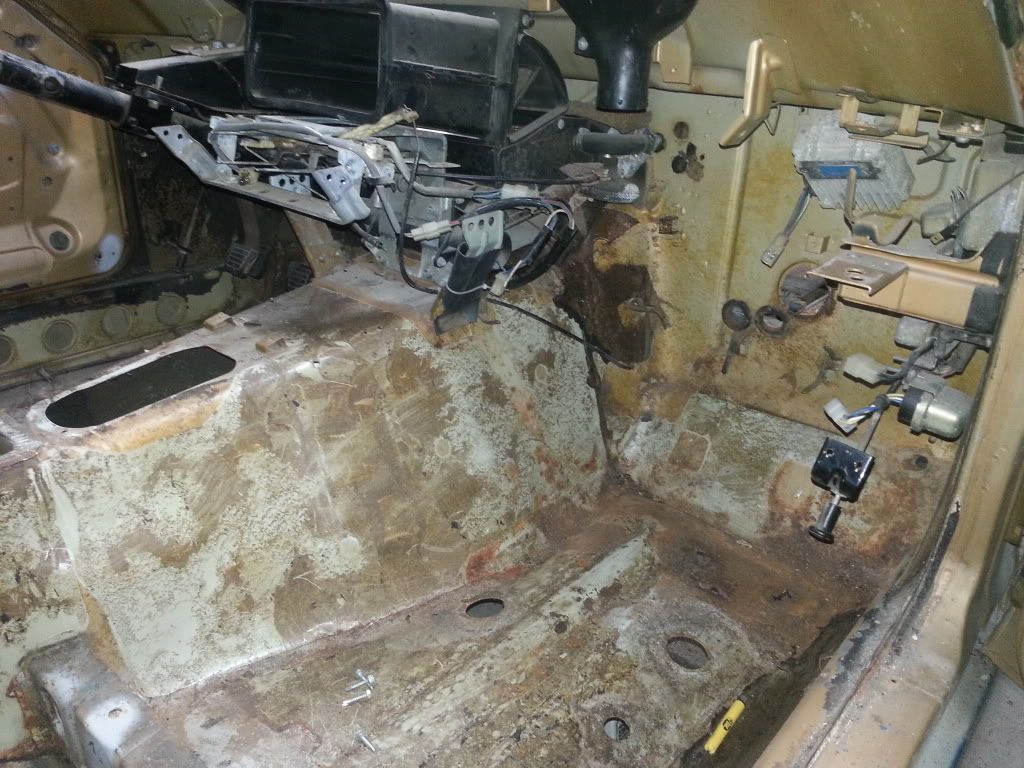
Went from this....


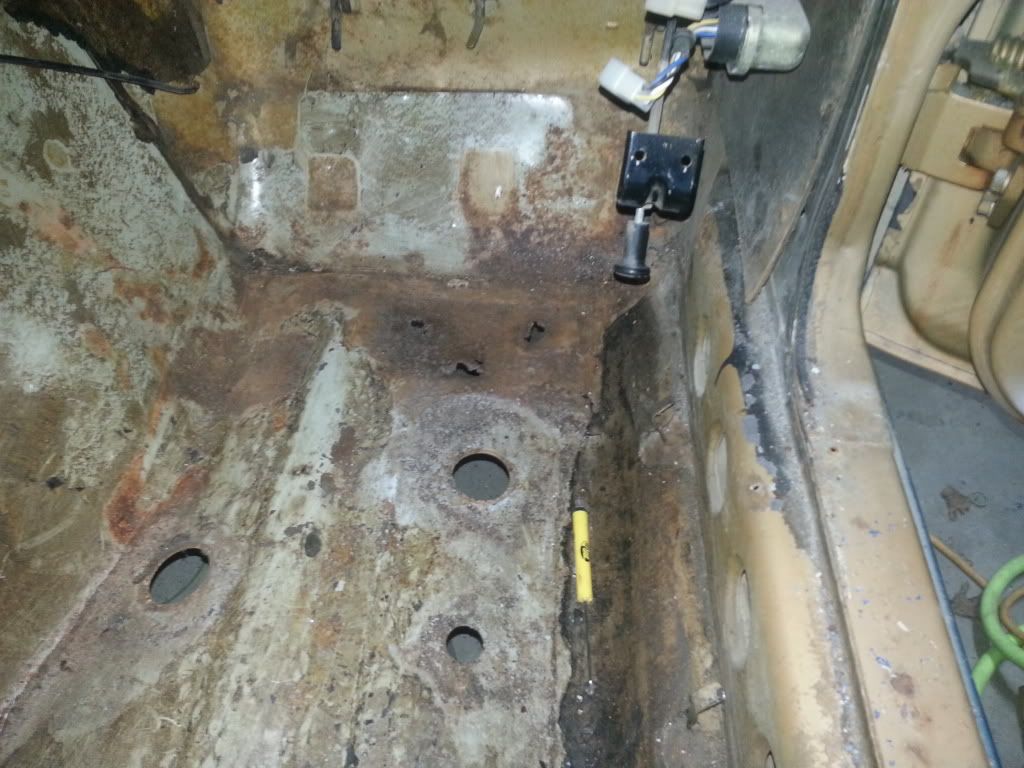
To this.


Scraped about 20lbs of tar and wool insulation.What you see is 5 minutes of grinding away from bare metal.


Next step is to cut those small holes out and weld in a new sheet. I'm going to use the front bumper that I took off as a panel. Recycling in the purest form. Don't mind the three round holes, those are supposed to be there.


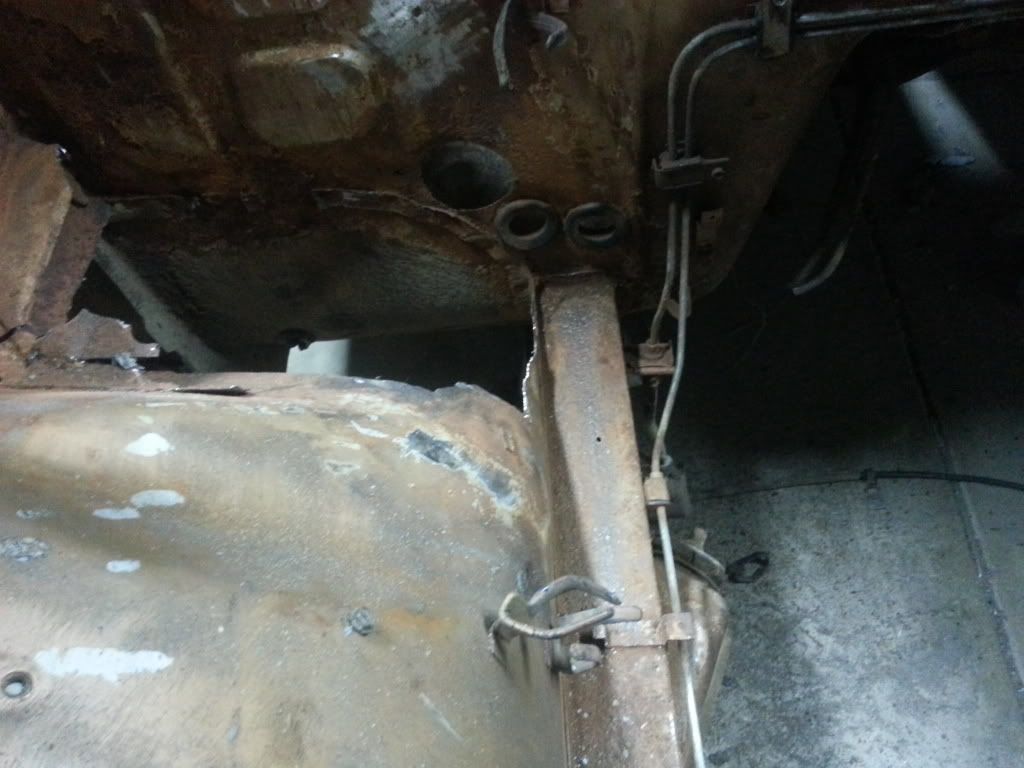
I also took a wire wheel to the frame and firewall on the battery tray hole area. Happy to report that the frame is in very good shape. I think I'm going to clean it up and weld in a piece o sheet metal in from the bottom. Haven't decided the best way to tackle it yet.

Friday, August 16, 2013

Progress update!

Progress is slow, but it's progress none the less.


Lower bumper, side bumpers, grille and bumper supports are off and gone. Aftermarket front air dam will replace all of that.


Vehicle is on stands, wheels are off, right headlight is out.


Left headlight is still stuck in.


Windshield is out and disposed of, was heavily cracked. Dashboard is out.


Rear windshield is out and set aside. Quarter windows are out, one was broken during removal.


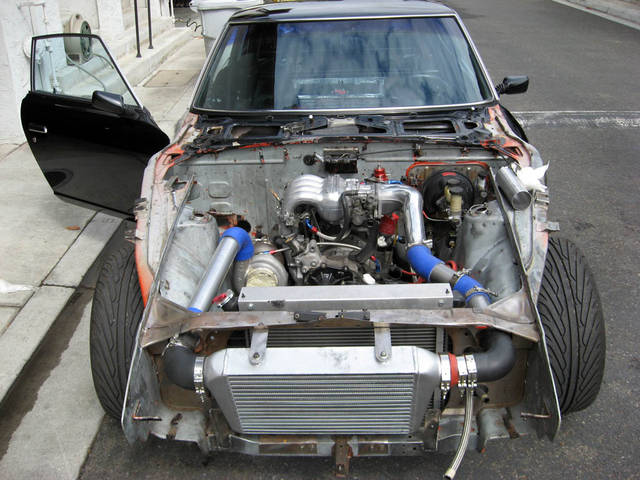
Engine bay about 90% stripped. Only needs brake and clutch cylinders removed. Also started on my rust hole. Entire engine bay and dashboard wiring harness has been removed from vehicle. Wires were very cracked and falling apart. Vehicle will need to be rewired for the new engine anyway so it's not that much more work to rewire the dash and cabin.


My rust hole is looking good, but still needs some touching up before a new panel is cut and formed.


So. We're getting there. Need to remove the hood, patch the engine bay rust hole and I can probably primer the engine bay.

Wednesday, July 17, 2013

Engine: Rotary? Why would anyone want one of those.

While having dinner with a blog reader, the topic of the car came up and I heard her say....

"Your not really going to put one of those......rotary engines......  in your car are you?"

There is no visual text that implies the disdain on the word rotary but it was there. Apparently my friend thought (like almost everyone) that the rotary engine is a bad engine that's time had come and went. Even went so far as to insinuate that I might as well put an electric motor in there.

After some discussion I think I turned her, but what about everyone else? Would everyone turn there nose at my spinning triangles?

I figure I should get some of the great myths dispelled now while I can.

1st.) Unreliable. "My friend had a sister that had an RX7 one time, it went through three engines before they gave up on it.

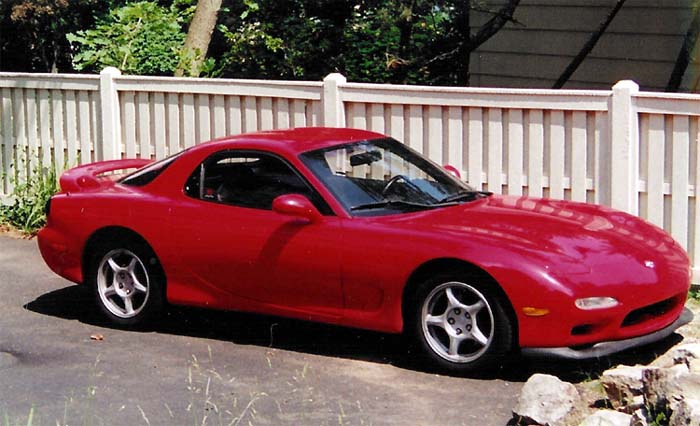
Every car person has thought about dancing with an RX7 at some point, but was probably scared away by
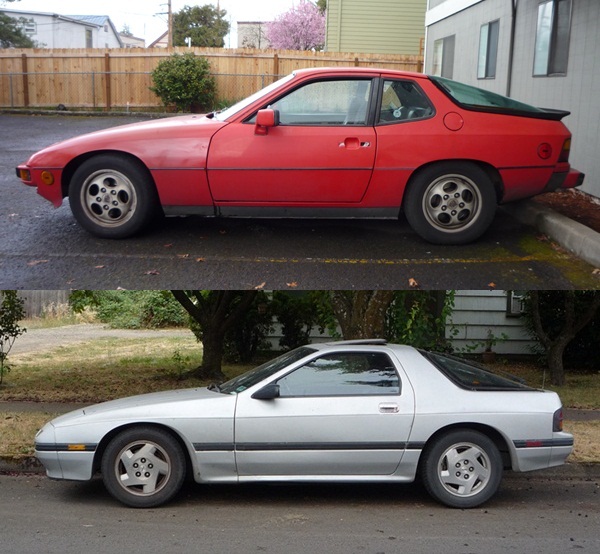
the horror stories of blown seals and leaking coolant rings costing entire engine rebuilds. The fact is most rotary failures are preventable with  correct maintenance and care that all high performance cars should have. When Mazda released the first turbo rotary in the US it was aimed directly at the Porsche 944 Turbo. It cost significantly less and in turn stole a lot of sales. The problem was, the turbo rotary is a legit race car engine turned down to a 4. It runs on air, fuel and oil. There is literally an oil injector in the block to spray the apex seal on each rotor. No one told the secretary's and 30 year old business men that and motors ran low on oil and popped.


When the twin turbo 93-95 RX7 came out, again no one told the people buying Porsche performance at Mazda prices that the cooling system was inadequate and the wiring was thinner to save on weight and it is supposed to consume a quart of oil every gas tank. Car's lost there first motor in the first year due to neglect.


Mazda almost went bankrupt on warranty claims. Ford bought them and said no more rotary engines and in 95 we lost out on the rotary until 2003 when the RX-8 debuted.

The truth? It's not an unreliable motor. It simply requires a watchful eye. I've owned a few RX7's. One had 200k miles on the original motor. You know why? Oil was checked at every fill up. I always rolled with a gallon of coolant and 4qts of 20w-50 non-synthetic.

The Rotary powered Datsun should only see 5000-10000 miles a year. It will be a special occasion driving it. Of course the fluids are going to be in good condition and topped off. Of course there will be air flow across the radiator and intercooler. We can design airflow channels for that.

Reliability in any car is only as good as the person maintaining the car. Not worried.

2.) Power. But doesn't an "INSERT WHATEVER MOTOR A PERSON LIKES" make more power?

Probably, but does your motor have the potential to make 300-500whp on stock internals, rev to 8k daily, weigh less than 300lbs dressed with transmission and is smaller than most suitcases? Oh yeah, it looks awesome too.


3.) Noise. Isn't it going to be loud and buzzy?

Yeah, but with correct muffler choice it will sound like a real race car. Buzzy? Not sure that's a word. No it won't. Rotary engines by design are insanely smooth engines. There is no up/down force to cause vibrations so no buzzing. The only buzzer is the one Mazda installs to remind you to shift because you won't feel a rotary engine at full bore. It's that smooth.

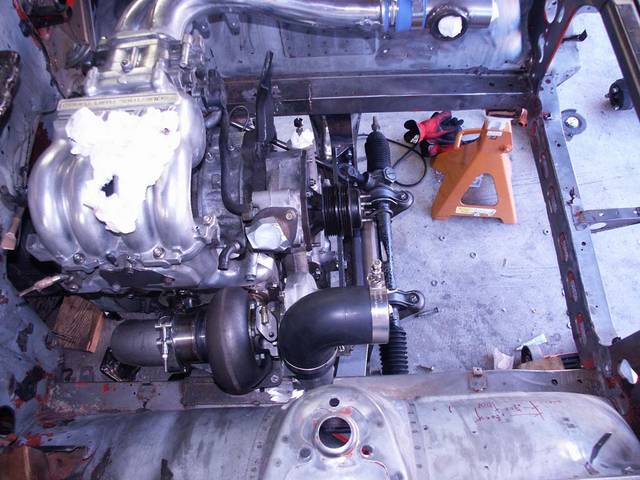
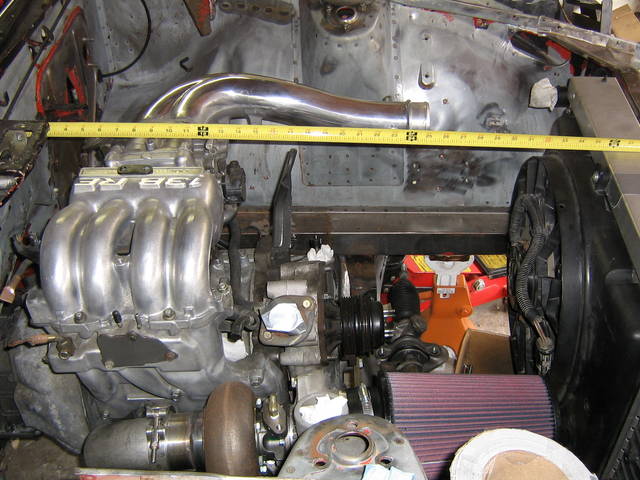
At this point I'm rambling. I haven't even test fit one yet. I know it will fit, and hope to have a dummy keg (equal to a block, you'll see when I put it together) in the next few weeks. I know it will fit because I found these.


For those playing at home, that ENTIRE MOTOR is only about 17 inches front firewall to timing cover. And it makes 300hp. Of yeah, it's only 1.3l.

To sum up, Rotary engines? Yes. They rock. Keep it clean, keep it full of oil, and your gold. Think I'm nuts? Sound off. Talk me out of it.
Sunday, June 30, 2013

Body: More Gel stripping.

So the roof is done, aside form the window frame edges. Waiting to do those until I can find a safe way to remove the chrome trim. Have to be careful because replacing those rain guards is expensive since their out of production.


Now that the paint is gone, we can try to fix that dent above the passenger door. Hopefully dry ice and a heat gun will make pull the dent. More on that later.


The hood is at about 90%. The bottom edge needs some more gel. Had to stop though. Once the sun hits the metal it gets too hot and the gel melts/evaporates before it can work it's voodoo magic. For the most part, no surprises on the hood.

The stripping gel does have one odd affect that I need to figure out whats up with.


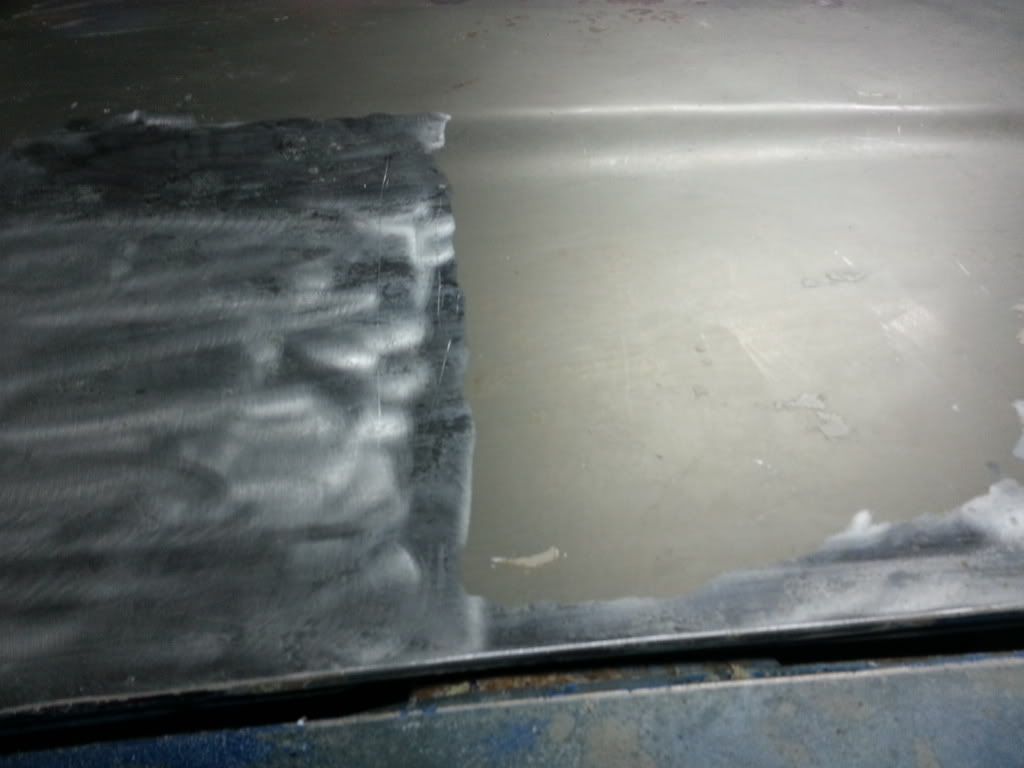
On the left, a section of hood that was grindered with an abrasive stripping disc. The right, stripping gel and a straight edge scrapper.

Their both bare metal, but I worry that there's a noticeable surface difference that will affect primers ability to grip into the metal. I suspect I still need to grinder over the car, but now there won't be 70lbs of lead paint dust in my garage.

Also, looking into hood scoops. Thinking about the Datsun Competition Scoop. Requires a big hole cut in the hood, but a great way to let hot air out of the hood, and maybe even help with aerodynamics.


Thursday, June 27, 2013